The clinical detour
Meal tolerance with ipamorelin
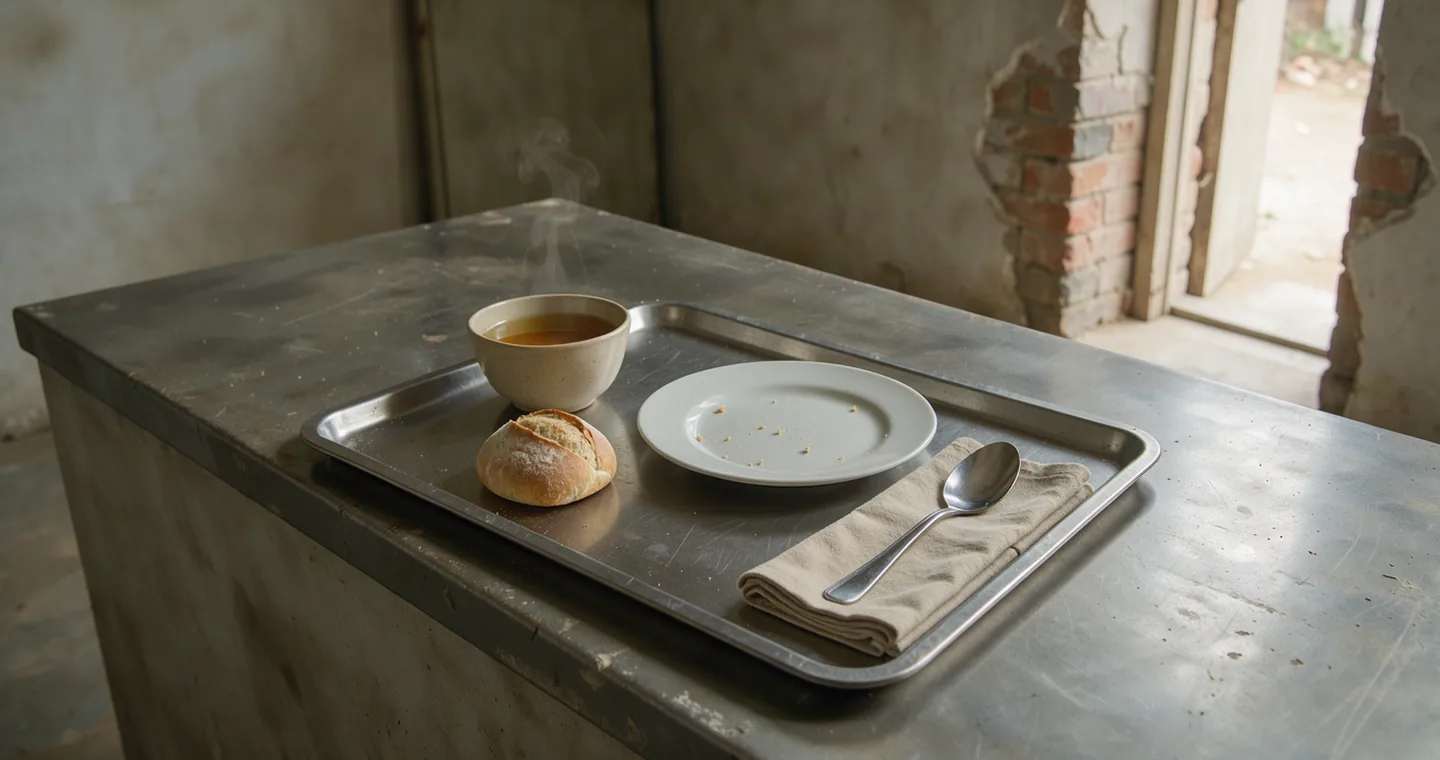
A meal is a small-looking endpoint with a substantial purpose. To me, restoring eating is an ambition worth a clinical trial.
Why the gut?
The turn toward bowel recovery had a biological rationale. A review of ghrelin and gastrointestinal disorders describes stimulation of gastric motility, tone and emptying by high-dose ghrelin and synthetic agonists of its receptor. That is class-level context. The direct ipamorelin experiment came in rats.
In a surgical rat model of postoperative ileus, repetitive intravenous ipamorelin increased cumulative faecal output, food intake and body-weight gain over 48 hours compared with vehicle. A single administration shortened the time to the first bowel movement. The model involved laparotomy and intestinal manipulation.
That collection of observations gives the human trial a coherent starting point. There is a coherent movement problem, an intervention and measurable recovery. The animal work supplied a reason to ask the clinical question; the subsequent trial had to supply its own answer.
The first tolerated meal
The published randomized, controlled study enrolled 114 adults undergoing open or laparoscopic bowel resection. Ipamorelin was given intravenously, and the primary endpoint was time to the first tolerated meal.
There’s something bracing about a question this ordinary. The question leaves the hormone assay behind and asks about something a person recovering from surgery can actually do. It also gives the trial a clear obligation: demonstrate a benefit on the chosen measure.
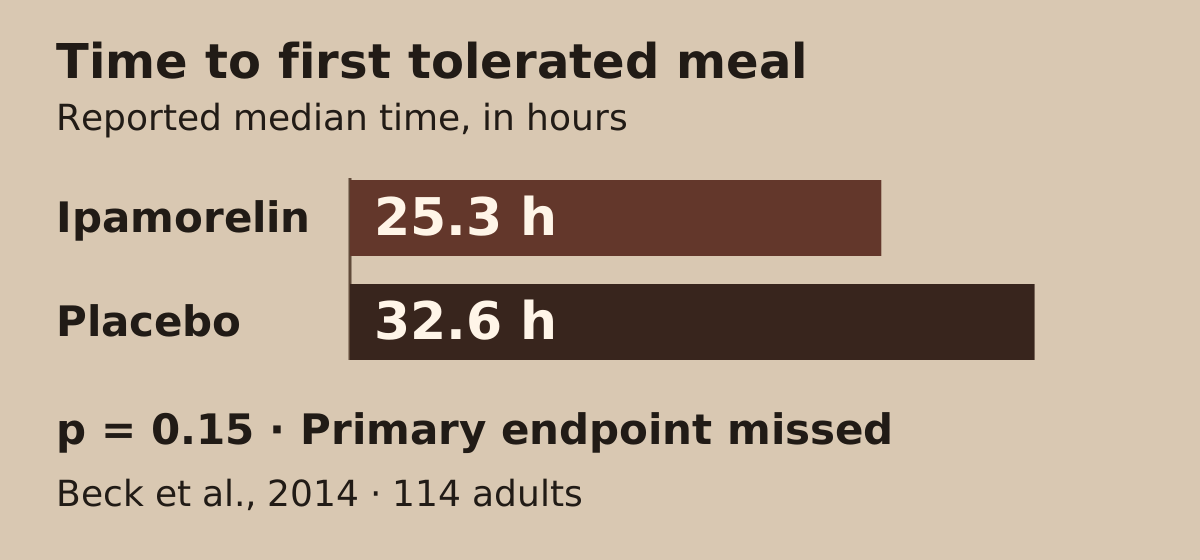
The median time was 25.3 hours with ipamorelin and 32.6 hours with placebo. Those values are visually tempting. They put the ipamorelin group earlier on the clock. The study nevertheless missed its primary endpoint, with p=0.15, and efficacy was not demonstrated. All of that comes from the same trial report.
The reported times
The bars show the reported medians on the same scale. The trial’s statistical result has to travel with them: p=0.15, primary endpoint missed. The shorter-looking bar is an invitation to oversell the experiment.
A difference between the group medians can be described without declaring treatment success. Equally, this unsuccessful primary endpoint leaves the underlying gut biology interesting. The clinical result can stay disappointing and the experimental question worthwhile. Neither needs cosmetic improvement.
Bowel-resection patients
This was an efficacy test after bowel resection, with a short perioperative safety window. The tested population, route and clinical aim give the answer its boundaries. It cannot answer a different question about healthy people’s training, sleep or appearance.
The meal has displaced the hormone pulse as my favourite question in this research. The disappointing result is a reason to take the clinical ambition seriously: it subjected an appealing biological idea to a useful test. The safety article returns to what was observed during that same short trial, and why it offers only limited reassurance.